ISHN logo
search
cart
facebook twitter linkedin youtube
  • Sign In
  • Create Account
  • Sign Out
  • My Account
ISHN logo
  • NEWS
    • Today's News
    • Global Safety News
    • Government Regulations
  • PRODUCTS
    • Product Innovations
    • Featured Products
  • TOPICS
    • Environmental Health and Safety
    • Facility Safety
    • Workplace Health
    • Occupational Safety
    • PPE
    • More Topics
  • CONSTRUCTION
  • TECHNOLOGY
  • COLUMNS
    • Best Practices
    • Dave Johnson: What’s going on
    • Editorial Comments
    • Leading Safety
  • MULTIMEDIA
    • ISHN Podcast
    • Videos
    • Cold Stress Education Quiz
    • Webinars
    • White Papers
  • MORE
    • Buyer's Guide
    • Newsletters
    • Convention Companion
    • Polls
    • Events
    • ISHN Store
    • Sponsor Insights
  • EMAGAZINE
    • eMagazine
    • Archived Issues
    • Contact
    • Advertise
  • JOIN TODAY!
Government Safety RegulationsOccupational SafetyColumnsWorkplace Safety CultureOil and Gas Industry Safety & Health

Road safety culture can be complacent

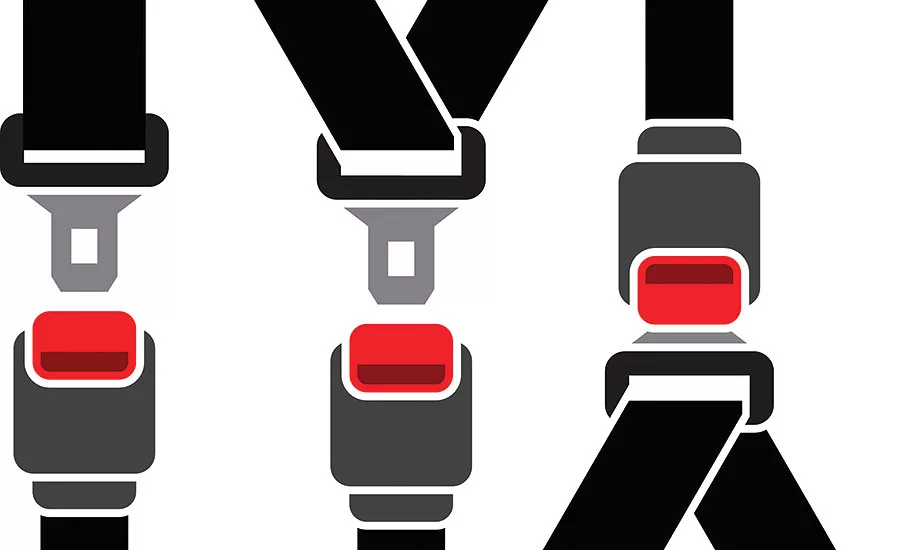
Is everyone buckled up?
By Dr. John Kello
Road safety culture can be complacent
March 20, 2019

In these days and times, knowing what we know, having heard all the public service announcements about seat belts, having learned all about it at school, with most cars buzzing or beeping until the seat belt is fastened, why on earth would anyone choose to drive or ride without the obvious and easy protection that safety belts provide?

Current data for my state (North Carolina) show that in 2017 there were around 1,400 traffic fatalities. Non-fatal injuries are estimated to be as much as 100 times that. About 350 of the roughly 1,400 fatalities were pedestrians, bicyclists, or motorcyclists, so safety belts were not an option for them. Of the roughly 1,050 fatalities of drivers and passengers, more than 40% were not buckled up. Side-by-side with such statistics, the data show that in NC overall safety belt use is estimated at around 91% (that may be a low estimate for drivers and front-seat occupants; other data suggest that back seat use may be as low as 70%). But the 9% or so who do not obey the law and use their restraints contribute disproportionately to traffic fatalities.

Peculiar laws

In doing research for this column, I found a number of peculiarities in safety belt laws. My state of North Carolina grants numerous exemptions from the law. Quoting verbatim from the NCDOT:

“Vehicles not required to have belts:

  • In general, these are cars made before 1968 and light trucks and vans made before 1972.
  • Professionally certified medical condition or mental phobia preventing use.
  • Rural letter carriers and newspaper carriers while performing duties.
  • A driver or passenger frequently stopping and leaving the vehicle or delivering property from the vehicle if the speed of the vehicle between stops does not exceed 20 miles per hour.
  • Vehicles with “Farm” or “Commercial” license plates while being used for agricultural purposes.”

“Odd and not safe”

I must comment on point #3 above. My neighborhood, while annexed to be a part of the town of Davidson, is not in the heart of our downtown area. It is a development, a couple of miles from town center, down a rural two-lane road. Our mail deliverers use their own vehicles, and do not wear safety belts. They drive from the passenger seat (I am not making this up), unbuckled. I suppose that some controlling legal authority has decided that it is safer for them to drive from the right seat and stuff mailboxes from the right side of the road, rather than to stay in the driver’s seat (belted) and pull over to the wrong side of the road to stuff mailboxes. But as a safety guy, it still strikes me as odd and not safe.

School buses exempted

NCDOT exemptions do not mention school buses (or any buses). Most states in the U.S. do not require safety belt use on full-sized school buses (currently 42 do not, while 8 do), and most school buses (including the vast majority of those in NC) do not have such safety belts at all.

So, children are appropriately indoctrinated in the legally mandated use of safety restraints in their parents’ cars and trucks, but the one vehicle in which they cannot use a safety belt is the big yellow “can of kids” that takes them to and from school five days per week, nine months per year.

I have heard the argument that school bus travel is safe, in that the buses are big and sturdy, designed differently than cars (“like giant egg cartons” to protect the kids), and after all, very few fatalities occur (around six per year). Plus, it would be very expensive to retro-fit school buses. Cost-benefit would argue against it.

 OK, points taken. But of those few fatalities, how many would have been prevented by safety belts? And what if we look at non-fatal injuries?  In NC alone, in 2016 there were 939 school bus crashes in the state, resulting in 296 injuries. The debate on safety belts in school buses continues.

Revive public service announcements

But as I suggested earlier, back in the day there were lots of public service announcements on radio and TV encouraging safety belt use. Today, not so much. We seem to accept it as “normal” that upwards of 40,000 people die on our roads every year, and a large percentage of the victims were not using safety belts. I see occasional “click it or ticket” billboards. Plus, most vehicles now have air bags.

But still, way too many people drive or ride unrestrained, and they are disproportionately represented in a group that no one wants to be part of, namely, fatal crash victims. The public service campaigns have done much good. So have the laws. Before the NC laws were enacted, safety belt use was estimated at 12-15% statewide. But while much higher now, safety belt use is still not 100%, despite the abundant evidence of the benefits of their use, and despite being required by law. Maybe it’s time for those campaigns to be revived.

Issues other than traffic safety have become “hot.” Especially visible today is the problem of the opioid epidemic, and more generally drug overdose deaths (more than 70,000 annually, with more than 47,000 of those deaths being opioid-related). The media attention paid to the opioid epidemic is well deserved.

KEYWORDS: Driver Safety highway safety oil and gas industry safety seat belt use vehicle safety

Share This Story

Looking for a reprint of this article?
From high-res PDFs to custom plaques, order your copy today!

Dr. John Kello is a Professor Emeritus of Industrial-Organizational Psychology at Davidson College, with a Graduate Faculty Associate appointment to the Doctoral Program in Organizational Science at the University of North Carolina-Charlotte. Additionally, John is President and Senior Consultant with John E. Kello & Associates, Inc., an Organization Development (OD) consulting firm which serves a national list of clients. Visit www.kelloandassociates.com


Recommended Content

JOIN TODAY
to unlock your recommendations.

Already have an account? Sign In

  • forklift safety

    Exploring the latest technologies in forklift safety

    With more staff and more stock in warehousing now more...
    Workplace Training Strategies
    By: Josh Cramer
  • welding

    All about welder’s flash or arc eye

    A flash burn is a painful inflammation of the cornea,...
    Environmental Health and Safety
  • dangerous jobs

    The 10 most dangerous jobs in the U.S.

    On-the-job deaths have been rising — hitting the highest...
    Occupational Safety
    By: Benita Mehta
Manage My Account
  • eMagazine Subscriptions
  • ISHN Newsletter & Other Newsletter Alerts
  • Online Registration
  • Manage My Preferences
  • Subscription Customer Service

More Videos

Sponsored Content

Sponsored Content is a special paid section where industry companies provide high quality, objective, non-commercial content around topics of interest to the ISHN audience. All Sponsored Content is supplied by the advertising company and any opinions expressed in this article are those of the author and not necessarily reflect the views of ISHN or its parent company, BNP Media. Interested in participating in our Sponsored Content section? Contact your local rep!

close
  • man wearing the the Sundström SR200 Full Face Mask Respirator
    Sponsored byOHD

    5 Fit Testing Mistakes That Could Cost You

  • This image shows Magid AcuSpex polarized blue mirrored safety glasses.
    Sponsored byMagid Glove and Safety

    Construction PPE Guide: What Crews Need for Each Task

  • lone worker in confined space
    Sponsored byAlphasense Ltd.

    GET THE LEAD OUT of your Safety Oxygen Sensors!

Popular Stories

SpaceX 7 launch

OSHA Investigating Fatal Fall at SpaceX Starbase

dust explosion

Tennessee OSHA Issues Record $3.1M Fine After Deadly Explosion at Munitions Plant

Worker Impairment

How to Tell When a Co-Worker is Impaired? A Safety Pro’s Challenge

top 10 most dangerous jobs

Poll

Seasonal Readiness

With the federal heat stress prevention rule on the horizon, which area of your safety program needs the most attention?
View Results Poll Archive

Products

Surviving an OSHA Audit A Management Guide, 2nd Edition

Surviving an OSHA Audit A Management Guide, 2nd Edition

See More Products

ISHN Podcasts

Related Articles

  • Safety success can be scary

    See More
  • Safety success can be scary

    See More
  • Don’t let safety culture become complacent

    See More

Related Products

See More Products
  • 1119772133.jpg

    Delivering Safety Excellence: Engagement Culture at Every Level

  • 9781138749573.jpg

    Occupational Health and Safety Management: A Practical Approach, Third Edition

  • occup safety.jpg

    Occupational Safety and Health: Fundamental Principles and Philosophies

See More Products

Related Directories

  • EME Safety LLC

    EME Safety offers non-ionizing radiation training and survey services. We can provide EME safety training with CEUs through our IEEE credentialed courses. We can also provide survey services and in-person training. Training can be provided for a few hours to multiple days to meet your learning needs.
  • Florida Chamber Safety Council

    With vision and strategy guided by a Statewide Leadership Advisory Board, the Florida Chamber Safety Council is creating national standards for workplace safety, implementing first-in-the-nation programs to prevent injuries, reduce operational costs, and improve production, performance, and corporate safety culture.
  • e-Hazard

    E-Hazard is dedicated to building an electrical safety culture with you. Our electrical engineering services and training will prepare your team for any electrical safety needs or concerns. E-Hazard can help with electrical training, arc flash studies, electrical audits, electrical safety programs, LOTO, infrared scanning, NFPA 70B, consulting and much more.
×

Become a Leader in Safety Culture

Build your knowledge with ISHN, covering key safety, health and industrial hygiene news, products, and trends.

JOIN TODAY
  • RESOURCES
    • Advertise
    • Contact Us
    • Directories
    • Manufacturing Division
    • Store
    • Want More
  • SIGN UP TODAY
    • Create Account
    • eMagazine
    • Newsletters
    • Customer Service
    • Manage Preferences
  • SERVICES
    • Marketing Services
    • Reprints
    • Market Research
    • List Rental
    • Survey/Respondent Access
  • STAY CONNECTED
    • LinkedIn
    • Facebook
    • YouTube
    • X (Twitter)
  • PRIVACY
    • PRIVACY POLICY
    • TERMS & CONDITIONS
    • DO NOT SELL MY PERSONAL INFORMATION
    • PRIVACY REQUEST
    • ACCESSIBILITY

Copyright ©2026. All Rights Reserved BNP Media, Inc. and BNP Media II, LLC.

Design, CMS, Hosting & Web Development :: ePublishing