Leading Safety
Saying 'everyone is responsible for safety' is problematic
The entire group should not be held accountable for individual behavior
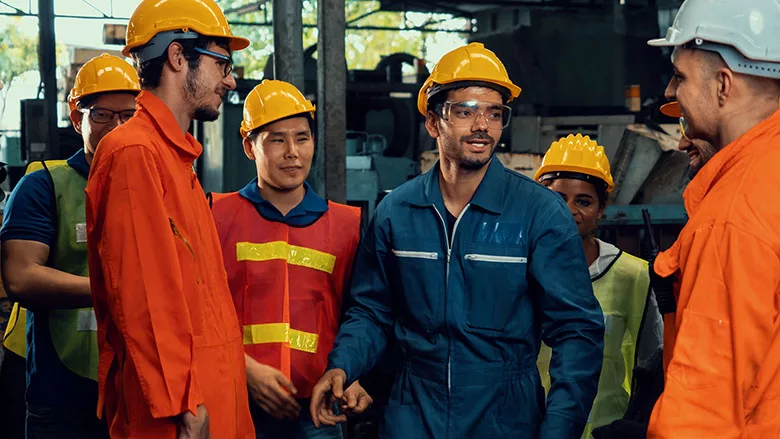
To improve their safety outcomes, some organizations advocate "everyone is responsible for safety." The thinking behind this is that it will create a universal mindset in their workforce to actively engage everyone, in not only thinking about their own safety but also pay attention to the behaviors and actions of others who may potentially be exposed to the risk of getting injured.
This should increase the attention to safety and minimize the risk of injury due to the concerted grass-roots effort. The fundamental problem with this thinking is that it is not practical to hold a group accountable for individual behavior.
Possible situational issues
To have an individual tell another worker that they are at risk of getting injured by the way they are engaged in performing the task; or the condition in which they are working in; they have to be sure of some of the following:
- That they perceive some form of hazard exists of which the other is not aware off.
- That the exposure of the worker to the hazard will eventually cause an injuring accident
- That the observer is certain of their assessment of the situation and has an appropriate suggestion to deal with the issue and resolve the situation.
- Things which may cause the observer to decide not to intervene:
- The observer may assume that the worker is aware of the hazard, the risk is low, and the worker is experienced and capable of working around it. Therefore, gives no warning.
- The observer not knowing the other or may feel less experienced than the worker performing the task and, so say nothing.
- The observer, not knowing the capability of the worker and so feel reluctant to voice concern for fear that the other may ridicule his concern.
- If there are others working in the area, then the observer may assume that one of the other persons present has already alerted or will alert the exposed worker and leave without saying anything.
- If the observer works for a different subcontractor, or in a different trade they may feel they don’t have the authority or the expertise to say something about the situation.
Others present in the area
Many social psychological experiments have demonstrated that individuals may avoid involvement not to indifference but due to others present in the general area. This is explained by the "diffusion of responsibility" theory. An individual may assume that since everyone is responsible anyone present may have, or will take the appropriate action. The end result is that everyone may come to that conclusion and so no one will actually do anything to further the cause of safety. Due to the “bystander effect” diffusion increases with groups over three. The most graphic example of this is the murder of Kitty Genovese in 1964.
Another reason for inaction involves the principle of social proof. In situations where we are not sure what the correct action or behavior ought to be, we look to see what others are doing. In a way, when there is doubt about what a person should do, it becomes a shortcut to deciding what to do. Other researchers have found that onlookers will tend to be less likely to intervene if the situation is perceived to be unclear, open to interpretation, or enigmatic. When the other people in the area fail to react, individuals often take this as a signal that any form of action or response is not required.
Impacting safe operations
Workers only control their own action and behavior related to the task. The supervisor impacts operational functions through planning, organizing, directing, staffing and controlling, as well as risk management. Therefore, the supervisor can affect the risk of injury more broadly and effectively than any worker.
Integrated planning: is fundamental to construction operations. It is through effective planning that all trades work harmoniously on the work site. Through effective planning, the project staff can ensure that all the necessary elements required to build the project successfully are devised to effectively deal with the identified potential risks of injuries to the workforce in order to achieve both production and safety goals.
Organizing: Management devises system (policies and procedures) and oversees operational functions to successfully achieve its goals and objectives. They assign roles, delineate responsibilities, set standards, and define expectations fosters communications, specify productivity, and innovation while holding people accountable, to ensure the work is performed safely as planned.
Directing: The various partners and vendors in the supply chain, as well as the workforce will require direction, coaching, information, motivation and leadership in order to function at optimal levels. Project managers should empower each person to make decisions, work cooperatively which enhances risk management, and problem solving.
Staffing: People are key to performance. Management selecting the "right" people for the "right" tasks and making sure they are doing the "right" things at the "right" time is fundamental to achieving excellence in safe operation. They must also be provided with the necessary tools, realistic goals, as well as empowered, enabled, motivated, and encouraged in their activities.
Controlling: Management control systems are tools used to direct the organization toward its strategic objectives. Control is an important function for ensuring that the organization, operations, or projects are on target to meet all the critical goals and specific deadlines. Control is an integrated technique for collecting and using information to motivate and direct employee behavior and to evaluate performance. Safety must be integrated into the overall management control system.
Though not a complete list, these areas should help achieve some improvement with relatively limited effort and disruption to existing operational systems and practices. This will only be accomplished if the employees trust the organization’s leadership, feel that they are treated fairly, and believe that they are valued. This fosters job satisfaction that leads to participation and involvement which furthers worksite safety.
Conclusion
Prior to assigning work, risk assessment and management should be implemented as part of operational planning. It should be integrated into overall management as part of organizing, directing, staffing and controlling of the work, which will go a long way to create a safer work environment. So, for the statement "everyone is responsible for safety" to become a reality in the sense that everyone actively is involved and striving to create a safe work environment, management has to create the environment, motivate the workforces to be involved and engaged, thereby enabling them to perform their work safely as well as successfully.
Looking for a reprint of this article?
From high-res PDFs to custom plaques, order your copy today!