ISHN logo
search
cart
facebook twitter linkedin youtube
  • Sign In
  • Create Account
  • Sign Out
  • My Account
ISHN logo
  • NEWS
    • Today's News
    • Global Safety News
    • Government Regulations
  • PRODUCTS
    • Product Innovations
    • Featured Products
  • TOPICS
    • Environmental Health and Safety
    • Facility Safety
    • Workplace Health
    • Occupational Safety
    • PPE
    • More Topics
  • CONSTRUCTION
  • TECHNOLOGY
  • COLUMNS
    • Best Practices
    • Dave Johnson: What’s going on
    • Editorial Comments
    • Leading Safety
  • MULTIMEDIA
    • ISHN Podcast
    • Videos
    • Cold Stress Education Quiz
    • Webinars
    • White Papers
  • MORE
    • Buyer's Guide
    • Newsletters
    • Convention Companion
    • Polls
    • Events
    • ISHN Store
    • Sponsor Insights
  • EMAGAZINE
    • eMagazine
    • Archived Issues
    • Contact
    • Advertise
  • JOIN TODAY!
Columns

PSYCHOLOGY OF SAFETY: Fueling the participation factor

By E. Scott Geller
January 31, 2002
This is the first of a four-part series addressing ways to get more people involved in efforts to prevent injuries on the job. The ten principles presented here are founded on accepted psychological theory and empirical research rather than common sense. Let's start with the most basic strategy of all, and probably the most important - our language.

1) Watch your language

Words shape our feelings, expectancies, attitudes and behaviors. Safety professionals commonly use words like "accident," "compliance," "regulation," "investigation," "occupant restraint" and "loss control."

Such language certainly limits voluntary participation. Who wants to get involved in an "accident investigation" that seemingly attempts to find out who didn't "comply" with some safety "regulation" and therefore contributed to a "loss"? And who feels good about putting on an "occupant restraint" in order to comply with a corporate "mandate"?

2) Shift safety from a priority to a value

Calling safety the "Number One Priority" puts management in an awkward position. Employees know safety is not number one - profit is. If the company does not make money, there are no jobs, and there's no need for occupational safety. So stop putting safety in a position to compete with profit-making. Instead, give safety a separate and special category - value. Our vision should be to make safety a value linked to every activity or priority in a work culture.

3) Take advantage of the competence motive

Stop talking about safety as if it's altruistic or self-sacrificing. This gives people an excuse for compromising safe operating procedures. "I just didn't have time to follow all of the precautions this time."

People want to be judged competent. If safety is a value - inherent to every job - disregarding any relevant safety process means the job is done incorrectly. The operator is incompetent. And remember, competence can only be improved through feedback.

4) Provide behavior-focused feedback

Practice does not make perfect. Only with appropriate feedback can we improve. In the workplace, competence-improving feedback that is objective, impersonal and specific can be delivered in three basic ways:

1) through one-on-one coaching; 2) through periodic performance appraisals (see my ISHN articles last Nov. and Dec. 2001); and 3) through group data graphs that display a work team's level of specific performance.

Whatever the method for providing directional and/or motivational feedback, the context must be positive.

5) Make feedback positive

People more often link feedback with "reprimand" than "praise." So don't expect people to naturally accept and look forward to receiving behavioral feedback. The nature of your conversation or group discussion surrounding a feedback session will determine whether such a process will be appreciated, supported and sustained. Your first feedback session needs to be predominantly positive and completely constructive.

6) Help people feel important

Negative feedback can degrade one's sense of importance, and that's disastrous for voluntary participation. Emphasize a person's positive contributions to worthwhile work. When people believe their work is genuinely appreciated, they want to improve. When they become competent at a valuable job, their sense of personal importance increases. Then, in the spirit of increasing their competence at a valuable work process, people will accept and apply relevant corrective feedback.

7) Look ahead, not back

When we have opportunities to coach or offer advice to individuals or groups, we need to move the communication from past to future and then to the present. Conversations about past experiences are pleasant and functional. They define mutual interests, attitudes or experiences and enable recognition for prior accomplishments, helping people feel important. But if you want productive change from a conversation, don't allow talk to get stuck in the past.

Move your communication from the past to a consideration of future possibilities or ideal improvement. Then bring the talk back to the present. Discuss things that can be put into effect now to bring the ideal future a step closer.

8) Set SMART goals

A conversation about progress can lead to beneficial change if SMART goals are set. The letters of SMART represent the essential components of an effective goal - Specific, Motivational, Attainable, Relevant and Trackable. Literally thousands of studies have demonstrated the power of SMART goals to improve performance at individual, group, organizational and community levels. We set a poor example when we refer to goals that are not SMART. In safety this happens whenever we say, "Zero injuries is our goal." This is not SMART; it misuses and abuses goal setting.

9) Distinguish goals from purpose

Please talk about zero injuries as a purpose or vision. "An injury-free work culture" is the ultimate result of gaining and sustaining maximum employee involvement in safety-related activities. So your purpose is to reach and maintain zero injuries. Participation is needed for various process activities that contribute to injury prevention and the attainment of a vision of "injury-free." Process activities can be defined in terms of a certain number of specific actions that need to occur in a given period of time in order to be "successful."

10) Use process measures

Keep score on the various proactive things individuals and groups do for safety. Monitor the numbers of near hits, property damage incidents and injuries reported. Track the number of corrective actions implemented and evaluated, the number of environmental and behavioral audits conducted, the number of environmental hazards eliminated, the number of safety suggestions and safety work orders submitted, and so on. Graph and post the percentage of individuals who participate in various safety-related activities, as well as the percentage of safe work environments and behaviors observed during systematic audits. This will give you an accountability system that can facilitate participation.

While these ten guidelines for fueling the participation factor are basic and readily implemented, expect some resistance - caused either by bad habits, disbelief or uncertainty that these recommendations will work. The guidelines I'll offer next month will provide ideas for reducing resistance to change as well as increasing involvement in industrial safety and health.

Note: More discussion of the strategies reviewed here can be found in Scott's new book, The Participation Factor, published by the American Society of Safety Engineers.

Links

  • Safety Performance Solutions

Share This Story

Looking for a reprint of this article?
From high-res PDFs to custom plaques, order your copy today!

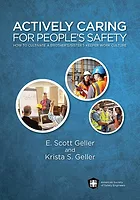
E. Scott Geller, Ph.D., is Alumni Distinguished Professor, Center for Applied Behavior Systems, Virginia Tech, and senior partner with Safety Performance Solutions, Blacksburg, VA. For more information visit www.safetyperformance.com. "Actively Caring for People's Safety: How to cultivate a brother’s/sister’s keeper work culture," co-authored by Scott’s daughter Krista, was recently published by ASSE. Scott’s 15-minute TEDX talk on You Tube can be accessed at: https://www.youtube.com/watch?v=7sxpKhIbr0E


Recommended Content

JOIN TODAY
to unlock your recommendations.

Already have an account? Sign In

  • forklift safety

    Exploring the latest technologies in forklift safety

    With more staff and more stock in warehousing now more...
    Workplace Training Strategies
    By: Josh Cramer
  • welding

    All about welder’s flash or arc eye

    A flash burn is a painful inflammation of the cornea,...
    Environmental Health and Safety
  • dangerous jobs

    The 10 most dangerous jobs in the U.S.

    On-the-job deaths have been rising — hitting the highest...
    Transportation Safety
    By: Benita Mehta
Manage My Account
  • eMagazine Subscriptions
  • ISHN Newsletter & Other Newsletter Alerts
  • Online Registration
  • Manage My Preferences
  • Subscription Customer Service

More Videos

Sponsored Content

Sponsored Content is a special paid section where industry companies provide high quality, objective, non-commercial content around topics of interest to the ISHN audience. All Sponsored Content is supplied by the advertising company and any opinions expressed in this article are those of the author and not necessarily reflect the views of ISHN or its parent company, BNP Media. Interested in participating in our Sponsored Content section? Contact your local rep!

close
  • man wearing the the Sundström SR200 Full Face Mask Respirator
    Sponsored byOHD

    5 Fit Testing Mistakes That Could Cost You

  • This image shows Magid AcuSpex polarized blue mirrored safety glasses.
    Sponsored byMagid Glove and Safety

    Construction PPE Guide: What Crews Need for Each Task

  • lone worker in confined space
    Sponsored byAlphasense Ltd.

    GET THE LEAD OUT of your Safety Oxygen Sensors!

Popular Stories

SpaceX 7 launch

OSHA Investigating Fatal Fall at SpaceX Starbase

Worker Impairment

How to Tell When a Co-Worker is Impaired? A Safety Pro’s Challenge

Automated loading dock equipment

After March 2026 Rivian Death, Safety Managers Reassess Loading Dock Systems Under OSHA's Warehouse Emphasis Program

top 10 most dangerous jobs

Poll

Seasonal Readiness

With the federal heat stress prevention rule on the horizon, which area of your safety program needs the most attention?
View Results Poll Archive

Products

Surviving an OSHA Audit A Management Guide, 2nd Edition

Surviving an OSHA Audit A Management Guide, 2nd Edition

See More Products

ISHN Podcasts

Related Articles

  • ASSE

    Hot off the ASSE press: Actively Caring for People’s Safety

    See More
  • Actively Caring for People’s Safety

    4 STEPS to cultivating a brother’s/sister’s keeper culture

    See More
  • actively caring for people, behavior-based safety

    Actively caring for people’s safety

    See More

Related Products

See More Products
  • Top Ten Pitfalls in OSHA Recordkeeping and How to Avoid Them

See More Products

Related Directories

  • American Society of Safety Professionals (ASSP)

    The American Society of Safety Professionals (ASSP) is a global association of occupational safety and health professionals who are dedicated to workplace safety. We provide education, safety standards, advocacy and a professional community that supports our diverse members and the profession.
  • Alliance of Women’s Safety Apparel Manufacturers (AWSAM)

    The Alliance of Women's Safety Apparel Manufacturers is a collection of specialty manufacturers and distributors committed to providing properly designed and fitted PPE for women. Our foundational pillars are Awareness, Access and Advocacy. Our non-profit organization has 12 Founding Members and aligns the needs of women in the workforce and the companies they work for with specialty manufacturers dedicated to providing appropriate PPE for women. The Founding Members of the organization have made great strides in removing barriers to access that have existed for many years and kept women from being equally protected. Together, we create a platform that increases awareness of products made for women, encourages equal access to appropriately fitting PPE, and advocates for the safety of women in the workforce. In the spirit of co-opetition, we collaborate to envision what is next for women in industry as we work side by side to accomplish our mission, increase our impact, and share the journey with everyone seeking to elevate diversity and equality in their workplace.
×

Become a Leader in Safety Culture

Build your knowledge with ISHN, covering key safety, health and industrial hygiene news, products, and trends.

JOIN TODAY
  • RESOURCES
    • Advertise
    • Contact Us
    • Directories
    • Manufacturing Division
    • Store
    • Want More
  • SIGN UP TODAY
    • Create Account
    • eMagazine
    • Newsletters
    • Customer Service
    • Manage Preferences
  • SERVICES
    • Marketing Services
    • Reprints
    • Market Research
    • List Rental
    • Survey/Respondent Access
  • STAY CONNECTED
    • LinkedIn
    • Facebook
    • YouTube
    • X (Twitter)
  • PRIVACY
    • PRIVACY POLICY
    • TERMS & CONDITIONS
    • DO NOT SELL MY PERSONAL INFORMATION
    • PRIVACY REQUEST
    • ACCESSIBILITY

Copyright ©2026. All Rights Reserved BNP Media, Inc. and BNP Media II, LLC.

Design, CMS, Hosting & Web Development :: ePublishing