Performance indicators are key safety components
The first word is Process. PSM is concerned with process issues such as fires, explosions and the release of toxic gases caused by process-oriented issues such as corrosion, chemical reaction and the inadvertent mixing of hazardous chemicals .
The second word in the term PSM is Safety. The initial driving force for most PSM programs was the need to meet a safety regulation and to reduce safety incidents related to process upsets and hazardous material release.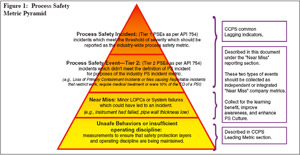
The third word is Management. A manager is taken to be anyone who has some degree of control over the process, including operators, engineers and maintenance workers. The word management also means that PSM is not just about equipment and instrumentation, but also covers issues as Employee Participation, Operating Procedures and Management of Change.
PSM is a systematic approach to major accident hazard management. It is a part of safety management, which focuses on the concerns of major hazards impacting safety, environmental damage and business losses. Oil & gas companies are significant users of PSM methods, particularly where there are hazardous processes or large inventories of flammable or toxic materials.
Rocking the industry
On March 23, 2005, BP’s Texas City, Texas refinery experienced a catastrophic process accident. This incident took the lives of 15 workers and injured more than 170. The BP refinery was celebrating a safety record at the time of the explosion.
This safety record was devoid of the true measurements of the current status of the facility; it was solely based on personal safety not process safety.
On the evening of April 20, 2010, a gas release and subsequent explosion occurred on the Deepwater Horizon oil rig working on the Macondo exploration well for BP in the Gulf of Mexico. Eleven people died as a result of the accident, and others were injured. The fire burned for 36 hours before the rig sank, and hydrocarbons leaked into the Gulf of Mexico before the well was closed and sealed, Deepwater Horizon sank and the Macondo well discharged hydrocarbons into the Gulf of Mexico for nearly three months before it was contained.
At that time BP had an aspiration goal of “no accidents, no harm to people,” had emphasized personal safety in recent years and had achieved significant improvement in personal safety performance, but BP did not emphasize process safety. BP mistakenly interpreted improving personal injury rates as an indication of acceptable process safety performance at its U.S. refineries. BP’s reliance on this data, combined with an inadequate process safety understanding, created a false sense of confidence that BP was properly addressing process safety risks.
BP appeared to have established a relatively effective personal safety management system by embedding personal safety aspirations and expectations within the U.S. refining workforce. However, BP had not effectively implemented its corporate-level inspirational guidelines and expectations relating to process risk. BP had not implemented an integrated, comprehensive, and effective process safety management system for its five U.S. refineries.
Not all hazards are the same or can cause equal consequences. Personal or occupational safety hazards such as slip, falls, cuts and vehicle accidents usually affect one individual worker.
On the other hand, process safety hazards may cause major accidents involving the release of potentially dangerous materials, fires and explosions or both. Process safety incidents can have catastrophic effects and can result in multiple injuries and fatalities, and substantial economic, property and environmental damage.
You don’t improve what you don’t measure
The Center for Chemical Process Safety (CCPS) was established in 1985 by the American Institute of Chemical Engineers (AIChE) for the express purpose of assisting industry in avoiding or mitigating catastrophic chemical accidents. An essential element of any improvement program is the measure of existing and future performance. To continuously improve upon process safety performance, it is essential that companies in the chemical and petroleum industries implement effective leading and lagging process safety metrics. A description of three types of metrics:
“Lagging” Metrics – a retrospective set of metrics that are based on incidents that meet the threshold of severity that should be reported as part of the industry-wide process safety metric.
“Leading” Metrics – a forward looking set of metrics which indicate the performance of the key work processes, operating discipline, or layers of protection that prevent incidents.
“Near Miss” and other internal Lagging Metrics – the description of less severe incidents (i.e., below the threshold for inclusion in the industry lagging metric), or unsafe conditions which activated one or more layers of protection. Although these events are actual events (i.e., a “lagging” metric), they are generally considered to be a good indicator of conditions that could ultimately lead to a more severe incident.
It is strongly recommended that all companies incorporate each of these three types of metrics into their internal process safety management system.
Such method of performance measurement of process safety was one of the recommendations by the national commission that investigated the Texas City incident: “BP should develop, implement, maintain, and periodically update an integrated set of leading and lagging performance indicators [or more effectively monitoring the process safety performance of the U.S. refineries by BP’s refining line management, executive management (including the Group Chief Executive), and Board of Directors. In addition, BP should work with the U.S. Chemical Safety and Hazard Investigation Board and with industry, labor organizations, other governmental agencies, and other organizations to develop a consensus set of leading and lagging indicators for process safety performance for use in the refining and chemical processing industries.”
I believe that if that measure of process safety performance is correctly implemented, it can lead us to be sure that there will not be another piper alpha or Macondo-type incident.
References
• National commission on the BP Deepwater horizon oil spill and offshore drilling
• Center for chemical process safety (CCPS)
Looking for a reprint of this article?
From high-res PDFs to custom plaques, order your copy today!


