Cancer is the leading cause of work-related mortalities in the European Union (EU) and is responsible for 100,000 unnecessary deaths a year. Yet most research and policy on its causes and prevention still assume that it is mainly men who are affected, even though an increasing proportion of the victims are now women. The need to shift research priorities and better address workplace prevention to reflect changing occupational risks was the subject of an ETUI conference in Brussels in early December.
The comment period is now open for the U.S. Department of Health and Human Services (HHS) proposed objectives for Healthy People (HP) 2030. This includes proposed core objectives for Occupational Safety and Health (OSH).
Work-related cancers cost between €270 ($343) and €610 ($776) billion a year in the EU-28 (the European Union including the United Kingdom, which is soon to become a non-member), according to a new book from the European Trade Union Institute.
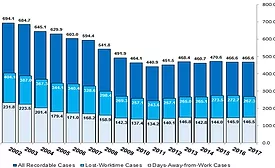
California’s Department of Industrial Relations (DIR) has posted California’s 2017
occupational injury and illness data on employer-reported injuries. According to the
estimates provided by the U.S. Bureau of Labor Statistics’ Survey of Occupational
Injuries and Illnesses (SOII), California had 466,600 nonfatal occupational injuries in
2017, a number stable from the prior year.
A look back at a mining disaster that led to landmark mining safety regulations; why a group of Philadelphia contractors has “Eggs with OSHA” and the benefits of the Internet of Things to oil and gas industry safety. These were among the occupational safety and health stories featured this week on ISHN.com.
A federal jury last week ruled that the company who hired workers to clean up a coal ash spill in Tennessee failed to protect them from the hazards involved. The ruling clears the way for workers affected by the highly toxic substance to seek damages from Jacobs Engineering, the company tasked with cleaning up a massive coal ash spill at the Tennessee Valley Authority's (TVA) Kingston Fossil Plant.
Heat stress illness among United States Postal Service employees in Las Vegas has resulted in a $129,336 fine against the USPS.
An OSHA investigation revealed that at least four USPS employees at the Silverado Station branch in Las Vegas received treatment for heat-related illness this year, including one hospitalization.
Twenty-nine Los Angeles firefighters have filed a lawsuit against Southern California Gas Co., alleging that the utility lied to them about the chemical hazards of a well blowout they responded to in October 2015, resulting in health problems from their exposure to toxins.
The American Industrial Hygiene Association (AIHA) is in favor an electronic submission requirement in OSHA’s proposed rule for the tracking of workplace injuries and illnesses – but it wants a worker privacy study conducted before the rule is finalized.
In a letter sent to the agency’s Director of Technical Support and Emergency Management, Amanda Edens, AIHA Director of Government Relations Mark Ames offered recommendations on the rule.
Recent studies show that the occurrence of Pneumoconiosis, or Black Lung disease, among coal miners across the Nation has skyrocketed beyond anything ever seen before in the industry. Younger, less experienced miners are contracting the disease at an earlier age, subjecting them to a shortened and debilitating existence until they ultimately succumb to the ravages of the illness.