Staff at the Anoka Metro Regional Treatment Center say safety conditions have deteriorated so badly at the state-run psychiatric hospital that many are afraid to go to work.
Workers say staff members have been knocked unconscious, dragged across the floor by their hair and had feces and urine thrown at them. Recently, a nurse was hospitalized after being beaten by a patient.
Associated General Contractors of America tries to reduce risk to workers
May 29, 2019
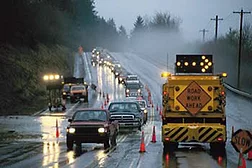
Some 67 percent of highway contractors report that motor vehicles crashed into their construction work zones during the past year, according to the results of a new highway work zone study conducted by the Associated General Contractors of America (AGC). In response, association officials have launched a new radio and media campaign urging drivers to slow down and remain alert in highway work zones.
Still using ladders and scaffolding at your workplace? Low-level access lifts—products designed to help you easily reach tasks at heights up to 20 ft—can replace them while bringing additional productivity- and safety-boosting benefits to your facility.
The Alaska Occupational Safety and Health Division issued 14 citations and $270,723 in penalties to Trident Seafood Corporation after two workers were seriously injured by unguarded machinery. Inspectors found that the company failed to provide machine guarding on augers, conveyors, sprocket wheels, and chains.
For motorists and the workers who build, repair, and maintain streets, bridges, and highways, roadway work zones can be dangerous. In these areas, a variety of complicated road signs, barrels and lane changes could increase the risk of motor vehicle crashes.
Oregon forestry workers who were injured on the job were more likely to fully recover if they received treatment and support from their employers, according to a recent study at the University of Washington. Those workers also reported that their employer promoted safety through policies, practices, and resources—indicators of a healthy safety climate.
A recent study of 1,334 workers from 20 mine sites found that miners who avoid risk were less likely to experience near-miss incidents, according to a paper published in the Journal of Loss Prevention in the Process Industries.
OSHA wants to hear from employers about how they’ve been using control circuit-type devices to isolate energy and about evolving technology for robotics.
The information request is for a possible update of the agency’s Control of Hazardous Energy (Lockout/Tagout (LOTO) standard.
Take longer shifts, add being new on the job and lacking a routine and you get an increased risk of injuries relative to those occurring during the first eight hours, according to a study published recently in Occupational & Environmental Medicine. Furthermore, incidents occurring during long working hours were more likely to result in a death or involve multiple injured workers.
As high school and college students get ready to put away the books and start summer jobs, OSHA hopes its #MySafeSummerJob program will help keep them safe in their new endeavors.
#MySafeSummerJob offers information for both employers and employees about occupational safety for young people – who generally have less experience and training and a lower awareness of hazards than older workers.