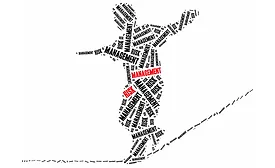
Not many people walk around throughout their day with a risk assessment in hand. We should, however, always have an informal risk assessment tool in our mind that allows us to perform at least a cursory assessment until we can dig deeper or in a more formal way.
Most all of us have been around a boss or supervisor who isn’t very likeable or open to feedback. He or she is often avoided, and people may even fear approaching that boss with a safety-related concern or idea for improvement. Workers who perceive their bosses as open believe their leader really listens to their ideas and acts upon them when appropriate — or at the very least, gives their ideas a fair shake.
Impacting organizational culture is a long-term, never-ending endeavor. Many companies struggle with maintaining and sustaining cultural initiatives because their impact may not be felt for several years. Culture, as an organizational construct, is a subjective factor not directly measurable by any instrument, survey or metric. Yet, everyone is impacted by culture and can describe when it turns bad.
Most organizational leaders are relatively clear about what they desire from their safety staff, but shouldn’t these same leaders ask what’s needed of them to achieve ongoing EHS success?
What are “The 7 Qualities of Outstanding Safety Professionals?” Josh Franklin, M.B.A., CSP, CET, and CeCe Weldon, M.B.A., CSP, ARM, will discuss their list on Wednesday during an educational session at Safety 2018.
The seven qualities are: Personal development, Balance, The average, C-suite perspective, The secret, Feedback, Giving back.
The hard part is getting teams to buy into the team vision to play selfless and trust that if they focus on all the intangibles, the scoring will come and at the end of the game the scoreboard will reflect their efforts.
Is safety culture driven from the top down or the bottom up, asks Patrick Karol, CSP, ARM, of Karol Safety Consulting. Karol explained key factors to successfully sell safety to front line employees on Tuesday afternoon.
Safety can be a tough sell. Even the word “safety” has negative connotations when we connect safety to terms like investigation, audit and disciplinary action, Karol said.
Behavior-based approaches to safety versus the promise of "Safety II" type approaches like Human and Organizational Performance (HOP) will be explored through a series of sessions at Safety 2018. Are the two approaches contradictory or complementary? How do employee perceptions affect safety?
For the past 30 years, I’ve been driven to be the best and do the best I can – in nearly any context, personally and professionally. Along the way, I’ve discovered various dimensions of growth that have helped me succeed. I want to pass them on, and share them, so they might help you.
Injuries in the workplace cost American companies billions of dollars every year. According to OSHA, it is estimated that employers spend 1 billion dollars a week on workers compensation costs in the United States. That is just the money going towards workers compensation. There are also costs that come from the days that injured employees miss work. Injuries and accidents that force injured employees to miss at least six days of work cost employers in the United States about 62 billion dollars a year.