Being a safety and occupational health leader is not easy. In many cases, the position requires enormous responsibility and accountability with little or no authority or resources.
Safety leadership is more than overseeing the general day-to-day of your organization’s safety program. Leading is about influencing employees and colleagues to meet the goals of your organization and safely fulfill their roles.
Since health and safety initiatives and overall health and safety commentary seem to be focused towards frontline workers, Positional Leaders appear to be getting a free pass on the safety train that already left the station a long, long time ago.
Sad but true. In 2020, OSHA celebrates its 50th anniversary. Safety’s sage, Dan Petersen, published “Safety Management, a Human Approach” in 1975. Lessons haven’t been learned.
Unfortunately, many organizations have a false perception that merely employing someone in a safety capacity is a risk control, as in, “Your Honor, we did our due diligence in safety… see, we hired a Safety Person (points to the ‘Safety Person’).”
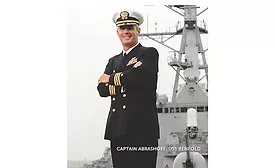
U.S. Navy Captain Mike Abrashoff was given command of the USS Benfold at age 36, making him the youngest commanding officer in the Pacific fleet. His challenge was daunting: the destroyer with 310 sailors was a notable loser, with low morale and the highest turnover in the Navy.
Many safety and health pros early in their careers face the challenge of establishing their credibility.
It is called the Batter’s Eye. You can find one in every Major League Baseball park and stadium. But the question is, where are they located? And the next question is, how do they work?
The union steward had just recounted an incident where a supervisor asked one of his workers to step into standing water to work on corroded gauges near the coker. The work needed to be done immediately as it would delay ongoing maintenance on the fractionator to take on different stock feed.
The knowledge gap within utilities, construction, and related industries is more of a growing concern than ever — especially when it comes to serious injuries and exposures.