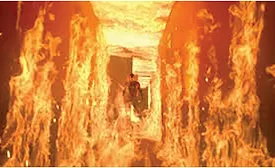
A series of catastrophic chemical incidents in the 1980s led to OSHA issuing its Process Safety Management of Highly Hazardous Chemicals standard in 1992. The PSM standard establishes a comprehensive management program that integrates technologies, procedures, and management practices.
Slip resistance testing is a complex process, and an effective slip test machine needs to control and measure a number of key criteria reproducing the critical factors relating to slip when walking. ASTM F2913-11 provides a quantitative assessment of the safety of footwear for the U.S. market.
As industrial robots continue to become more advanced, more capable and more popular, the need for comprehensive robot safety standards increases. Robots can be dangerous to operate – especially when safety protocols aren’t followed.
If your workers face short-term thermal exposure from fire, you should research the 2018 edition of the National Fire Protection Association (NFPA®) 2112 standard.
Our most recent column (October 2017, pp. 16-17) covered part one (of three) in developing an actionable safety plan. First we described some key First Actions in implementation. Below we describe the three action areas. Part three will detail Sustaining Actions.
The final rule, 29 CFR Part 1926, Subpart M, which became effective on February 6, 1995, contains general fall protection requirements for construction work.
The U.S. Chemical Safety Board has long asserted that chemical dust explosions are a "serious industrial safety problem." CSB research reveals that nearly 200 dust fires and explosions have occurred in U.S. industrial facilities over the past 25 years, resulting in approximately 100 fatalities and 600 injuries.
NFPA 70E responds to the latest information about the effects of arc flash, arc blast, and direct current (dc) hazards, and recent developments in electrical design and PPE. It provides vital information that helps you comply with OSHA 1910 Subpart S and OSHA 1926 Subpart K.
OSHA's standard for first aid training in general industry (29 CFR 1910.151(b)) and construction (29 CFR 1926.50(c)) require that an employer must ensure prompt first aid treatment for injured employees.
On January 6, 2016, OSHA announced that it would not issue citations under the standard to residential construction if the employer is making good faith efforts to comply with the training requirements of the standard.
 RSS
RSS