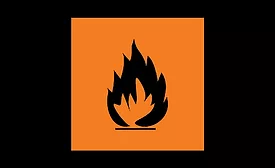
OSHA revised its Hazard Communication Standard (HCS) to align with the United Nations' Globally Harmonized System of Classification and Labeling of Chemicals (GHS) and published it in the Federal Register in March 2012 (77 FR 17574).
In March, 2016, OSHA issued a final rule to protect workers exposed to RCS in general industry and maritime. The agency will begin enforcing most provisions of the standard on June 23, 2018.
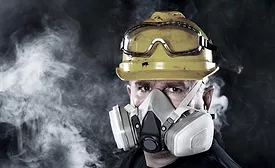
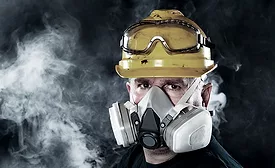
Certain respirators, known as tight-fitting respirators, must form a tight seal with your face or neck to work properly, according to OSHA. If your respirator doesn't fit your face properly, contaminated air can leak into your respirator facepiece, and you could breathe in hazardous substances.
Laboratory customers, regulatory authorities, organizations and schemes using peer-assessment, accreditation bodies, and others use ISO/IEC 17025:2017 to confirm or recognize the competence of laboratories. The standard promotes confidence in the operation of laboratories.
According to OSHA, combustible material can burn rapidly when in a finely divided form. If such a dust is suspended in air in the right concentration, under certain conditions, it can become explosive. Even materials that do not burn in larger pieces can explode in dust form.
Every workplace has unique health and safety requirements: office settings aren’t hard-hat zones and crab fishers don’t worry about typing-related carpal tunnel syndrome. Yet hand safety is a concern regardless of environment or job type.
It’s ideal to stay ready for the unexpected, especially when it comes to ornery winter weather. You will feel much more at ease if you transform those anxious feelings of anticipation into proactive preparation.
A survey of small business owners conducted by Travelers Insurance discovered that 44 percent of small businesses in the U.S. don’t have a written business continuity plan or any related document to explain how their business will operate in the event of serious weather emergencies.
The year has come full circle as we begin to enter winter months once again. Soon enough, businesses will reflect on the year’s accomplishments and potential areas for improvement. One area safety and operations leaders can master this season is workplace safety, as they find themselves shifting focus from summertime hazards to the risks brought on by harsh winter conditions.
The cold weather season is upon us, which means that outdoor job sites will face a new set of challenges. Emergency eyewashes and showers must continue to function no matter how low the temperature may drop. The ANSI/ISEA Z358.1 standard requires this equipment be protected from freezing temperatures when the threat of freezing is present.
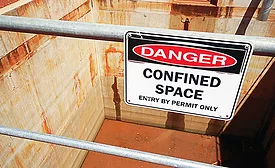
With over one million workers entering confined spaces each year, it’s essential that safety managers invest in developing a confined space entry (CSE) plan of action, which can help identify and alleviate present risks.
 RSS
RSS