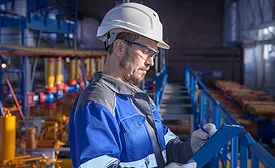
Oil and gas workers face numerous hazards daily, including the risk of fires, explosions, falls, confined spaces, machine malfunctions and much more, which is why employers take every precaution to protect their personnel, assets and the environment.
This article is really about putting all of the concepts in the previous articles together to come up with what will hopefully be the most significant change in thinking so far.
Topics to focus on workplace noise, air sampling and vibration
April 29, 2020
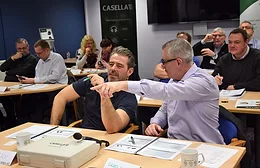
Casella has been committed to providing accessible training across its areas of core competency in the form of one-day introductory courses and on-site product training.
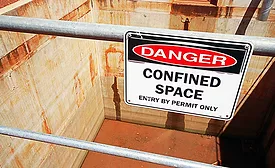
In construction and industry, some potential hazards visibly manifest, such as the risk of falls from heights. Others are more hidden. A confined space may not look dangerous, but workers perish each year because someone assumed the air inside was safe to breathe when testing would have revealed that is wasn’t.
The American Journal of Clinical Nutrition recommends drinking up to 3 liters of fluid a day. Water is vital for all cell function. It helps your brain to produce hormones and neurotransmitters, supports the lubrication of joints, keeps your skin cool through sweating or respiration, and your body to excrete waste.
Better sleep habits may help reduce heart disease risk, aid in weight loss
April 1, 2020
Sleeping well, long enough and having regular bedtimes, in addition to meeting the American Heart Association’s (AHA) Life’s Simple 7 (LS7) guidelines, may help reduce the risk of heart attacks, strokes and other cardiovascular diseases.
Any organization utilizing electrical assets in their production environments or facilities will be aware of NFPA 70E, Standard for Electrical Safety in the Workplace. This standard is what OSHA uses when assessing companies’ adherence to certain safety standards. However, NFPA 70E is further informed by the standard 1584-2018, which is developed by the IEEE.
Invited to do a workshop for a very large international corporation, I went out to a dinner where I sat next to the “grand poohbah” vice president in charge of all things quality and safety. He leaned over to me and said:
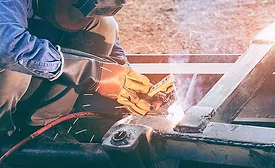
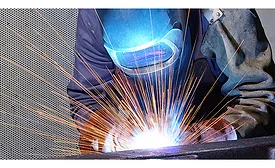
The act of joining together two different pieces of metal is nothing new. Over the past few centuries, however, new industrial techniques have yielded a variety of different types of welding that can create stronger bonds and expand the kinds of material that can be joined together.