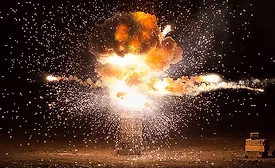
For more than a decade, OSHA has placed an emphasis on combustible dust hazards, which have resulted in numerous deadly incidents over the years. While no OSHA standard directly addresses combustible dust, this has not hindered OSHA enforcement.
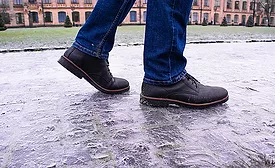
Changing seasons can bring a plethora of hazards to a workplace, especially when it comes to winter weather. Some of the most common accidents that can occur as a result of winter conditions are slips, trips and falls.
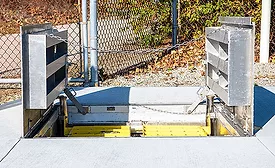
Employees working at water treatment plants face danger every day. The work is inherently treacherous, as water makes every step potentially hazardous, and sometimes even life-threatening.
If the CIH and CSP are high-water marks for quality, what are the lowest quality OHS credentials? The constant flux of the unregulated OHS credential market along with hazy transparency and other issues e.g., no standard benchmark makes this an impossible question to answer.
Last March, even the most experienced safety professionals couldn’t have foreseen what construction job sites would look like today. Along with the introduction of even more stringent safety protocols came a slew of new technologies.
Despite two severe amputation injuries in 2018 and 2020 on the same machine at a Lakewood, New Jersey, ice cream manufacturing plant, a recent federal safety and health inspection found the company continued to ignore protocols designed to prevent other workers from suffering similar injuries.
Cority, the global enterprise environmental, health, and safety (EHS) software provider, announced a collaboration with 3M’s Personal Safety Division in the area of Connected Safety technologies.
The COVID-19 pandemic has affected nearly every aspect of our lives, as well as virtually every industry on Earth. For starters, we’ve seen numerous disruptions to the food supply chain, in addition to increased reports of contaminated meat and poor working conditions in factory farms.
 RSS
RSS