ISHN logo
search
cart
facebook twitter linkedin youtube
  • Sign In
  • Create Account
  • Sign Out
  • My Account
ISHN logo
  • NEWS
    • Today's News
    • Global Safety News
    • Government Regulations
  • PRODUCTS
    • Product Innovations
    • Featured Products
  • TOPICS
    • Environmental Health and Safety
    • Facility Safety
    • Workplace Health
    • Occupational Safety
    • PPE
    • More Topics
  • CONSTRUCTION
  • TECHNOLOGY
  • COLUMNS
    • Best Practices
    • Dave Johnson: What’s going on
    • Editorial Comments
    • Leading Safety
  • MULTIMEDIA
    • ISHN Podcast
    • Videos
    • Cold Stress Education Quiz
    • Webinars
    • White Papers
  • MORE
    • Buyer's Guide
    • Newsletters
    • Convention Companion
    • Polls
    • Events
    • ISHN Store
    • Sponsor Insights
  • EMAGAZINE
    • eMagazine
    • Archived Issues
    • Contact
    • Advertise
  • JOIN TODAY!
Transportation Safety

NTSB IDs cause of med helicopter crash

Pilot killed, two flight nurses injured
NTSB
March 31, 2017

A particular preflight system check and the lack of an indication in the cockpit that could have alerted the pilot of low hydraulic pressure resulting in high pedal loads and a subsequent loss of control after takeoff, was the probable cause of a helicopter crash in Colorado that killed the pilot and seriously injured two flight nurses, according to the National Transportation Safety Board (NTSB).

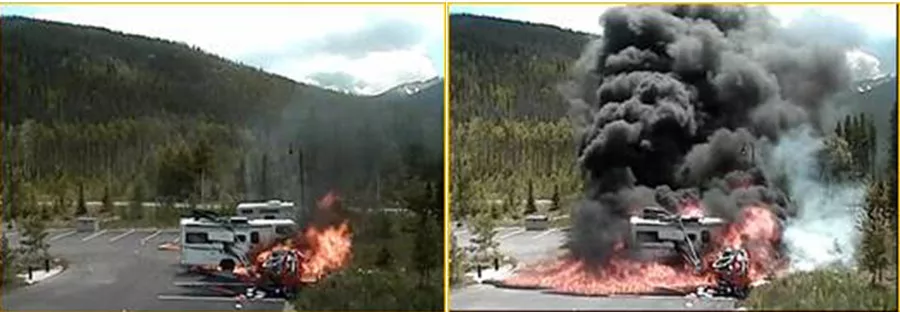
(In the image above, still frames from Summit Medical Center surveillance video show the accident helicopter engulfed by a fuel-fed fire 20 seconds after impact [left] and at 60 seconds after impact [right].)

How it happened

On July 3, 2015, the pilot, with two flight nurses aboard, took off from a hospital helipad in Frisco, Colorado. As they became airborne, the Airbus Helicopters AS350 B3e helicopter operated by Air Methods Corporation began spinning counterclockwise, gaining about 100 feet of altitude before plunging downward, impacting the ground at an estimated vertical speed of about 40 mph.

The pilot was required to perform a preflight check during which the hydraulic switch was moved to its off position, which cuts off hydraulic pressure to the tail rotor flight controls. The investigation revealed that the hydraulic system was likely misconfigured.

Just 10 months before the accident, the helicopter manufacturer had issued a safety notice to inform operators that attempting flight without the hydraulic switch in the correct position could render the helicopter uncontrollable because of the resulting lack of hydraulic assistance to the tail rotor system.

Pilot not alerted

The investigation noted that there was no annunciation in the cockpit to alert the accident pilot that a critical system needed for safe flight was not configured correctly. "Because the pilot had no alert indication in the cockpit that the switch was not in the correct position, he likely didn't know why he was having difficulty controlling the helicopter," said  NTSB Acting Chairman Bella Dinh-Zarr.  "It's in these treacherous airborne seconds that pilots need access to the information that a warning indication can provide."

Surveillance video showed a fuel-fed fire ignited a few seconds after impact. Investigators determined that the helicopter occupants’ severe thermal injuries would have been reduced or eliminated had the helicopter been equipped with a crash-resistant fuel system. At the time of the crash, no such system was available for existing AS350 B3e models; Airbus Helicopters has since provided a crash-resistant fuel system retrofit for that model.

"People make mistakes"

Although described by colleagues as safety conscious, risk adverse and one who followed procedures, the pilot did not perform a hover check, which could have alerted the pilot of an increase in pedal loads, as company procedures required. Such a check involves hovering the aircraft three to five feet above the ground to determine that all systems are functioning and the helicopter is controllable.

"Although adherence to flying procedures could have prevented this crash, we have long known that people make mistakes, which is why we need to take every opportunity to enhance systems that can help mitigate human error,” said Dinh-Zarr.

As a result of the investigation, the NTSB issued two recommendations to the Federal Aviation Administration, two to Airbus Helicopters, and one each to the European Aviation Safety Agency, the Association of Critical Care Transport, the Association of Air Medical Services and the Air Medical Operators Association. The NTSB also reiterated two previously issued recommendations related to flight data recorders.

The abstract, including the full text of the findings and probable cause of the crash, along with staff presentations and safety recommendations, is available on line at https://go.usa.gov/xXXGk. The final report will be available in several weeks.

KEYWORDS: accident prevention transportation safety

Share This Story

Looking for a reprint of this article?
From high-res PDFs to custom plaques, order your copy today!

Recommended Content

JOIN TODAY
to unlock your recommendations.

Already have an account? Sign In

  • forklift safety

    Exploring the latest technologies in forklift safety

    With more staff and more stock in warehousing now more...
    Facility Safety
    By: Josh Cramer
  • welding

    All about welder’s flash or arc eye

    A flash burn is a painful inflammation of the cornea,...
    Environmental Health and Safety
  • dangerous jobs

    The 10 most dangerous jobs in the U.S.

    On-the-job deaths have been rising — hitting the highest...
    Government Safety Regulations
    By: Benita Mehta
Manage My Account
  • eMagazine Subscriptions
  • ISHN Newsletter & Other Newsletter Alerts
  • Online Registration
  • Manage My Preferences
  • Subscription Customer Service

More Videos

Sponsored Content

Sponsored Content is a special paid section where industry companies provide high quality, objective, non-commercial content around topics of interest to the ISHN audience. All Sponsored Content is supplied by the advertising company and any opinions expressed in this article are those of the author and not necessarily reflect the views of ISHN or its parent company, BNP Media. Interested in participating in our Sponsored Content section? Contact your local rep!

close
  • man wearing the the Sundström SR200 Full Face Mask Respirator
    Sponsored byOHD

    5 Fit Testing Mistakes That Could Cost You

  • This image shows Magid AcuSpex polarized blue mirrored safety glasses.
    Sponsored byMagid Glove and Safety

    Construction PPE Guide: What Crews Need for Each Task

  • lone worker in confined space
    Sponsored byAlphasense Ltd.

    GET THE LEAD OUT of your Safety Oxygen Sensors!

Popular Stories

SpaceX 7 launch

OSHA Investigating Fatal Fall at SpaceX Starbase

Worker Impairment

How to Tell When a Co-Worker is Impaired? A Safety Pro’s Challenge

Automated loading dock equipment

After March 2026 Rivian Death, Safety Managers Reassess Loading Dock Systems Under OSHA's Warehouse Emphasis Program

top 10 most dangerous jobs

Poll

Seasonal Readiness

With the federal heat stress prevention rule on the horizon, which area of your safety program needs the most attention?
View Results Poll Archive

Products

Surviving an OSHA Audit A Management Guide, 2nd Edition

Surviving an OSHA Audit A Management Guide, 2nd Edition

See More Products

ISHN Podcasts

Related Articles

  • NTSB determines cause of EMS helicopter crash (5/11)

    See More
  • CSB IDs cause of 2016 Pascagoula gas plant explosion

    See More
  • CSB IDs cause of 2015 ExxonMobil refinery explosion

    See More

Events

View AllSubmit An Event
  • October 18, 2017

    ACGIH® TLV® For Audible Sound – Understanding the Proposed Notice of Intended Change to The Acgih® Tlv® for Noise

    Occupational noise exposures represent an important but under-recognized cause of disease and disability in the United States. Now titled as Audible Sound, the ACGIH® Threshold Limit Values for Physical Agents (TLV®-PA) Committee has proposed a revision to the TLV® for Noise.
View AllSubmit An Event

Related Directories

  • BrimGuard

    BrimGuard fits over most any North American style hard hat (cap or full brim) and provides a highly visible color-coded identification for your new hires. With BrimGuard, you can: -Reduce the risk of accidents and injuries by making new hires stand out from the crowd -Increase the accountability and responsibility of new hires by making them easily recognizable -Enhance the communication and collaboration between new hires and seasoned workers by facilitating mentoring and feedback -Save time and money by eliminating the need for stickers, decals, or separate hard hats for new hires -Improve the morale and retention of new hires by making them feel welcome and supported BrimGuard is made of durable, lightweight, and washable reusable silicone that can withstand harsh work environments. It comes in safety colors to suit your needs.
×

Become a Leader in Safety Culture

Build your knowledge with ISHN, covering key safety, health and industrial hygiene news, products, and trends.

JOIN TODAY
  • RESOURCES
    • Advertise
    • Contact Us
    • Directories
    • Manufacturing Division
    • Store
    • Want More
  • SIGN UP TODAY
    • Create Account
    • eMagazine
    • Newsletters
    • Customer Service
    • Manage Preferences
  • SERVICES
    • Marketing Services
    • Reprints
    • Market Research
    • List Rental
    • Survey/Respondent Access
  • STAY CONNECTED
    • LinkedIn
    • Facebook
    • YouTube
    • X (Twitter)
  • PRIVACY
    • PRIVACY POLICY
    • TERMS & CONDITIONS
    • DO NOT SELL MY PERSONAL INFORMATION
    • PRIVACY REQUEST
    • ACCESSIBILITY

Copyright ©2026. All Rights Reserved BNP Media, Inc. and BNP Media II, LLC.

Design, CMS, Hosting & Web Development :: ePublishing