ISHN logo
search
cart
facebook twitter linkedin youtube
  • Sign In
  • Create Account
  • Sign Out
  • My Account
ISHN logo
  • NEWS
    • Today's News
    • Global Safety News
    • Government Regulations
  • PRODUCTS
    • Product Innovations
    • Featured Products
  • TOPICS
    • Environmental Health and Safety
    • Facility Safety
    • Workplace Health
    • Occupational Safety
    • PPE
    • More Topics
  • CONSTRUCTION
  • TECHNOLOGY
  • COLUMNS
    • Best Practices
    • Dave Johnson: What’s going on
    • Editorial Comments
    • Leading Safety
  • MULTIMEDIA
    • ISHN Podcast
    • Videos
    • Cold Stress Education Quiz
    • Webinars
    • White Papers
  • MORE
    • Buyer's Guide
    • Newsletters
    • Convention Companion
    • Polls
    • Events
    • ISHN Store
    • Sponsor Insights
  • EMAGAZINE
    • eMagazine
    • Archived Issues
    • Contact
    • Advertise
  • JOIN TODAY!
Today's Safety NewsGovernment Safety RegulationsColumnsEditorial Comments: Safety & Health | ISHN

New York City doubles down on traffic fatalities & injuries

Meeting the promise of “Vision Zero”
By Dave Johnson
New York City doubles down on traffic fatalities & injuries
August 1, 2019

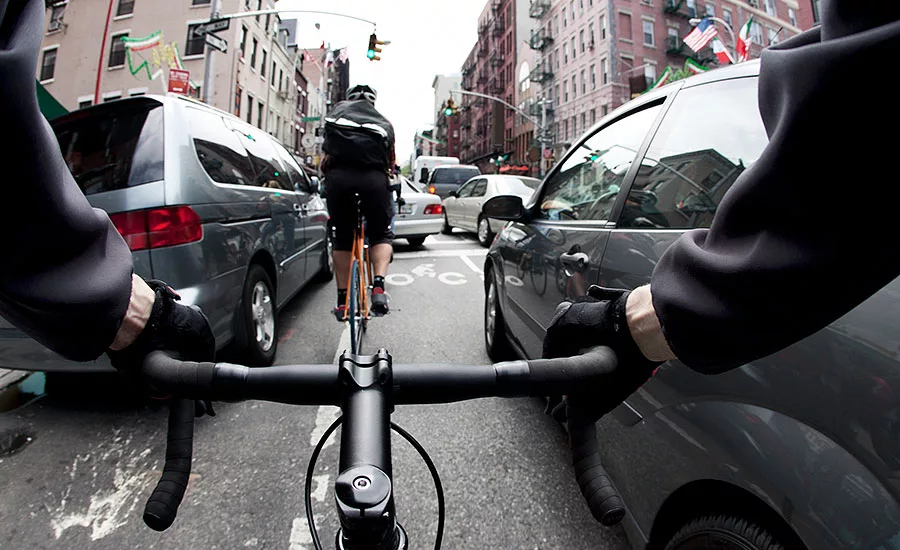
I recently moved to downtown Philadelphia, where a car is optional if you work from home, and I thought about buying a bike. Everyone rides a bike in the city. Friends told me it’s dangerous and be careful. So it was with interest I read an article in The New York Times with the headline, “After 3 Cyclist Deaths, Mayor Vows Crackdown.”

It turns out that since 2014, NYC Mayor Bill de Blasio has set a goal, or more specifically a “vision,” that traffic deaths and injuries on city streets is, in his words, “not acceptable and… serious crashes will no longer (be regarded) as inevitable. We won’t accept this any longer.”

Preventable incidents –not accidents

In New York leading up to 2014, approximately 4,000 New Yorkers were seriously injured and more than 250 were killed each year in traffic crashes. On average, vehicles seriously injured or killed a New Yorker every two hours. As in workplaces with rising injury and fatality rates, senior leadership declared this status quo unacceptable. And as in workplaces, City of New York leaders vowed that traffic crashes must no longer be regarded as mere “accidents,” but preventable incidents that can be systematically addressed. Echoing workplace managers, city leadership said “the promise of Vision Zero will require constant input and feedback from citizens.” As every safety professional knows, the journey to zero requires engagement.

The Mayor says Vision Zero is working. The number of people killed in traffic fatalities fell from 299 in 2013 to 203 in 2018, the lowest level in more than a century. But as with any safety initiative, challenges and setbacks are inevitable.

The challenges

The number of people riding bikes in NYC has soared. About 400,000 bike rides take place in the city every day, up from about 180,000 bike rides in 2006, according to the city. Cycling has emerged as an alternative to New York’s uninviting subways and buses, especially in boroughs outside of Manhattan where access to public transit can be limited.

Along with the rise in cyclists, city streets are crowded with more trucks making deliveries due to the booming growth of Amazon and other online merchants. The city has 1,240 miles of bike lanes – and about 6,000 miles of streets. These factors are challenging.

The setbacks: the late June three cyclists were killed in little more than a week. Citywide, 100 people have been killed in traffic crashes so far this year – 11 more than in the same period last year. This includes 51 pedestrians, eight motorcyclists and 27 motor vehicle occupants.

What happens to any safety program when the vision of zero is suddenly disrupted by a spate of fatalities? Leadership reacts. Mayor de Blasio said in a televised interview, “We absolutely have an emergency on our hands. We’re going to do a full-court press to stop it.”

In industry, it is workers, in New York it is cyclists — in both cases people on the frontlines — who speak out. One cyclist in The Times article said, “Vision Zero is a theory.” How many workers do not believe zero is attainable – random acts will always happen? To the Mayor’s credit, he refers to his program as a “vision,” not a goal with a specific deadline.

Typical reactions

Still, when safety programs meet adversity, safety advocates complain, as they have in New York, that Vision Zero has stalled and leadership has lost its focus in seeing it through. Said one activist in The Times article: “Mayor de Blasio is in denial about his signature program faltering under his neglect.”

Also, predictably, when safety efforts hit turbulence, senior leaders publicly double down on their commitment. New York’s mayor is using language and tactics familiar to any safety professional. There will be a crackdown on discipline, ensuring that drivers (or in workplaces the employees) abide by the rules.

On New York streets, this means closer policing of human error – obeying speed limits, yielding to cyclists and pedestrians, and respecting bike lanes. It means more emphasis on enforcement. More street cameras. Higher penalties and sanctions for dangerous driving. Pursuing new laws and regulations to protect cyclists and target reckless drivers.

Safety advocates in New York, again, as in industry, want a more systems approach, an engineering controls approach. Only 480 miles of the city’s 6,000 miles of streets use barriers to separate riders from traffic. Of course barriers, like engineering controls, are more costly than handing out tickets.

Vision Zero calls for safety engineering improvement at 50 intersections and corridors, installing 250 speed bumps, enhancing street lighting at 1,000 intersections, installing traffic signals where needed for speed control, and double the number of programmable speed boards for intensive education and awareness.

Success stories

Vision Zero is not unique to New York City. Not surprisingly, the originator of Vision Zero is Sweden – one the world’s most progressive safety countries. Traffic fatalities have dropped 30 percent since 1997 in Sweden. Minnesota, Utah and Washington State introduced Vision Zero-style programs in the early 2000s. Traffic fatalities have fallen 43 percent in Minnesota, 48 percent in Utah, and 40 percent in Washington. Since 1997, fatality rates in Vision Zero states fell more than 25 percent faster than the nation.

As with many safety clampdown efforts, when senior leadership makes a highly public commitment in money and muscle, incident rates come down. And when setbacks occur, it will be senior leaders who are brought to task. One cyclist called out Mayor de Blasio, saying, “We really need (him) to step up and bring some sanity to our streets.”

Be it public safety or industrial safety, the onus is inevitably on senior leadership to step up.


—  Dave Johnson, ISHN Editor,

johnsond@bnpmedia.com

KEYWORDS: bicyclist safety pedestrian safety traffic safety vehicle safety

Share This Story

Looking for a reprint of this article?
From high-res PDFs to custom plaques, order your copy today!

Djohnson new pic 7.10.22

Dave Johnson was chief editor of ISHN from 1980 until early 2020. He uses his decades of expertise to write on hot topics and current events in the world of safety. He also writes and edits at Dave Johnson’s Writing Shop LLC and is editor-at-large for ISHN. Find him at https://www.facebook.com/Dave-Johnsons-Writing-Shop-101316571547263/, and on LinkedIn at https://www.linkedin.com/in/daveljohnsoneditor/.

Recommended Content

JOIN TODAY
to unlock your recommendations.

Already have an account? Sign In

  • forklift safety

    Exploring the latest technologies in forklift safety

    With more staff and more stock in warehousing now more...
    Facility Safety
    By: Josh Cramer
  • welding

    All about welder’s flash or arc eye

    A flash burn is a painful inflammation of the cornea,...
    Environmental Health and Safety
  • dangerous jobs

    The 10 most dangerous jobs in the U.S.

    On-the-job deaths have been rising — hitting the highest...
    Occupational Safety
    By: Benita Mehta
Manage My Account
  • eMagazine Subscriptions
  • ISHN Newsletter & Other Newsletter Alerts
  • Online Registration
  • Manage My Preferences
  • Subscription Customer Service

More Videos

Sponsored Content

Sponsored Content is a special paid section where industry companies provide high quality, objective, non-commercial content around topics of interest to the ISHN audience. All Sponsored Content is supplied by the advertising company and any opinions expressed in this article are those of the author and not necessarily reflect the views of ISHN or its parent company, BNP Media. Interested in participating in our Sponsored Content section? Contact your local rep!

close
  • man wearing the the Sundström SR200 Full Face Mask Respirator
    Sponsored byOHD

    5 Fit Testing Mistakes That Could Cost You

  • This image shows Magid AcuSpex polarized blue mirrored safety glasses.
    Sponsored byMagid Glove and Safety

    Construction PPE Guide: What Crews Need for Each Task

  • lone worker in confined space
    Sponsored byAlphasense Ltd.

    GET THE LEAD OUT of your Safety Oxygen Sensors!

Popular Stories

SpaceX 7 launch

OSHA Investigating Fatal Fall at SpaceX Starbase

Automated loading dock equipment

After March 2026 Rivian Death, Safety Managers Reassess Loading Dock Systems Under OSHA's Warehouse Emphasis Program

psychology in the workplace

Most Workplaces Measure Psychological Safety, Ignoring Psychosocial Risks

top 10 most dangerous jobs

Poll

Seasonal Readiness

With the federal heat stress prevention rule on the horizon, which area of your safety program needs the most attention?
View Results Poll Archive

Products

Surviving an OSHA Audit A Management Guide, 2nd Edition

Surviving an OSHA Audit A Management Guide, 2nd Edition

See More Products

ISHN Podcasts

Related Articles

  • Labor Department files suit against New York City social service agency on behalf of employee terminated for exercising workplace safety rights (10/22)

    See More
  • Helicopter-noise complaints soar in New York City

    See More
  • A quick guide to New York City’s fall hazards and dropped objects dangers

    See More

Related Products

See More Products
  • 1118645685.jpg

    Advanced Safety Management: Focusing on Z10 and Serious Injury Prevention, 2nd Edition

See More Products

Events

View AllSubmit An Event
  • December 16, 2016

    ASSE to host virtual symposium on new OSHA Walking-Working Standard

    The American Society of Safety Engineers is offering a virtual symposium to help occupational safety and health professionals better understand the sweeping changes OSHA recently made to its final rule on Walking-Working Surfaces and Personal Fall Protection standards in relation to slip, trip and fall hazards.
View AllSubmit An Event

Related Directories

  • New Pig

    The world leader in absorbent products, New Pig provides innovative products to help maintain cleaner, safer, more productive work environments.
×

Become a Leader in Safety Culture

Build your knowledge with ISHN, covering key safety, health and industrial hygiene news, products, and trends.

JOIN TODAY
  • RESOURCES
    • Advertise
    • Contact Us
    • Directories
    • Manufacturing Division
    • Store
    • Want More
  • SIGN UP TODAY
    • Create Account
    • eMagazine
    • Newsletters
    • Customer Service
    • Manage Preferences
  • SERVICES
    • Marketing Services
    • Reprints
    • Market Research
    • List Rental
    • Survey/Respondent Access
  • STAY CONNECTED
    • LinkedIn
    • Facebook
    • YouTube
    • X (Twitter)
  • PRIVACY
    • PRIVACY POLICY
    • TERMS & CONDITIONS
    • DO NOT SELL MY PERSONAL INFORMATION
    • PRIVACY REQUEST
    • ACCESSIBILITY

Copyright ©2026. All Rights Reserved BNP Media, Inc. and BNP Media II, LLC.

Design, CMS, Hosting & Web Development :: ePublishing