ISHN logo
search
cart
facebook twitter linkedin youtube
  • Sign In
  • Create Account
  • Sign Out
  • My Account
ISHN logo
  • NEWS
    • Today's News
    • Global Safety News
    • Government Regulations
  • PRODUCTS
    • Product Innovations
    • Featured Products
  • TOPICS
    • Environmental Health and Safety
    • Facility Safety
    • Workplace Health
    • Occupational Safety
    • PPE
    • More Topics
  • CONSTRUCTION
  • TECHNOLOGY
  • COLUMNS
    • Best Practices
    • Dave Johnson: What’s going on
    • Editorial Comments
    • Leading Safety
  • MULTIMEDIA
    • ISHN Podcast
    • Videos
    • Cold Stress Education Quiz
    • Webinars
    • White Papers
  • MORE
    • Buyer's Guide
    • Newsletters
    • Convention Companion
    • Polls
    • Events
    • ISHN Store
    • Sponsor Insights
  • EMAGAZINE
    • eMagazine
    • Archived Issues
    • Contact
    • Advertise
  • JOIN TODAY!
Today's Safety NewsOccupational SafetyEnvironmental Health and SafetyColumnsSafety Industry White PapersOSHA Workplace HealthWorkplace Safety CultureWorkplace Training Strategies Risk Management

Closing Time

Leadership gaps & situational awareness

Know the causes of cognitive errors

By David Sarkus MS, CSP
Leadership gaps & situational awareness
September 12, 2019

The knowledge gap within utilities, construction, and related industries is more of a growing concern than ever — especially when it comes to serious injuries and exposures. 

I often speak with clients about their need for trainable or experienced workers in carpentry, electrical, plumbing, welding, or in HVAC systems. And if we look further, this gap certainly extends to leaders who are expected to support workers with these skills, especially leaders who have limited experiences of their own. Leaders who lack hands-on experience often lack the competencies to more fully understand various jobs and the situational hazards that could lead to various errors and harm producing incidents. 

Increasing knowledge of mental errors

We now have more tools at our disposal than ever before. One evolving field of study that is showing more interest and application is that of the cognitive sciences, and mental errors, cognitive slips, attentional control, and situational awareness. There are many models and thoughts floating around, but I believe our efforts should be directed toward using applied work that is readily understandable for both front-line leaders and workers. The aerospace industries along with the medical researchers have taken the lead in this arena, especially over the past 20 years or more. So, please let me throw some mud against the wall and see what may stick for you and your organizations.

What causes errors?

Having a taxonomy of causal factors to categorize errors and appropriate interventions is a good starting point. And situational awareness seems to be one causal factor that often becomes a major contributor to errors and subsequent accidents (Endsley, MR, 1995). I believe in parsimony in creating a practical model for use by front-line supervisors and workers. When we do this, we can obtain greater buy-in and use but may limit the enhancements and comprehensive nature of a more sophisticated model. But I’ll take buy-in and practical use, any day of the week.

Here are seven causal factors:

  1. Poor planning at any level will cause a host of safety-related problems. Good planning includes materials, people, tools, equipment, and processes. Each of these are a big part of getting a job done efficiently, effectively, and safely. 
  2. Failure to recognize hazards needs to be supported by training and follow-up. Pre-job briefings, task hazard analyses, and related learnings requires attention and abatement of the concerns identified.   
  3. Failure to incorporate hazards. When work operations become busy, workers may recognize various hazards but forget about them throughout the course of their day, which may lead to unabated hazards and injuries. Mental overload may be an underlying concern that should be addressed. 
  4. Incomplete information. Some leaders make decisions on the floor or in the field with limited knowledge and proceed somewhat blindly. Some hazards on a start-up job may not have been well identified, subsequently a line or job is launched, leading to a serious accident. Something as simple as a guard or new tool that wasn’t properly installed, or appropriate training may be part of the solution.   
  5. Procedural deviations such as omitting an important step or task is an oversight, knowledge or execution gap that requires significant attention. Salience in communications and a thorough understanding of procedures becomes increasingly important. 
  6. Failure to predict consequences. In some cases, workers recognize a given hazard but fail to attach meaning to what they’ve seen. Individuals may continue working but fail to understand how that hazard could eventually impose harm. For example, the movement of people and related line-of-fire risks, or an open container of low flash point solvents that could be ignited through the use of nearby tools or equipment. 
  7. Fatigue may play a big part in physical and mental miscues that underlie many near-misses and accidents. Time-outs, appropriate breaks, diet and exercise are all part of the solution. 

Diminishing unwanted errors

I’m fully aware of other contemporary taxonomies that are more comprehensive, but some organizations, along with their front-line leaders and workers, may not benefit from such complexities (Zhang J., Patel V.L., Johnson T.R., Shortliffe E.H., 2004). Even more, today’s data-driven solutions provide similar models that may need to be enhanced. Our challenge, as professionals, is to provide meaningful categorizations of situational or mental errors, and corresponding interventions and training that can lessen their impact. 

Finally, today’s complex organizations, with intricate people interactions, processes, and human factors interfaces, may require more robust but practical strategies. However, having a starting point to limit cognitive errors and issues, through front-line leaders and workers, is a key factor in diminishing unwanted consequences. 


References

  1. M.R., Endsley, A taxonomy of situation awareness errors. In Eds. R. Fuller, N. Johnson, and . McDonald (Eds.), Human Factors in Aviation Operations. Aldershot, England:  Avebury Ashgate Publishing Ltd.; 1995.
  2. Zhang J., Patel V.L., Johnson T.R. and Shortliffe E.H.  A cognitive taxonomy of medical errors.  Journal of Biomedical Information 2004; 37, 193-204. 
KEYWORDS: safety leadership safety management

Share This Story

Looking for a reprint of this article?
From high-res PDFs to custom plaques, order your copy today!

David J. Sarkus, MS, CSP, is the president and founder of David Sarkus International Inc.
David is a speaker, author, consultant, and leadership coach with over 30 years of experience. His efforts focus mainly on leadership, engagement, and cultural assessments, which aim to improve sustainable EHS excellence. Visit https://davidsarkus.com/

Recommended Content

JOIN TODAY
to unlock your recommendations.

Already have an account? Sign In

  • forklift safety

    Exploring the latest technologies in forklift safety

    With more staff and more stock in warehousing now more...
    Facility Safety
    By: Josh Cramer
  • welding

    All about welder’s flash or arc eye

    A flash burn is a painful inflammation of the cornea,...
    Environmental Health and Safety
  • dangerous jobs

    The 10 most dangerous jobs in the U.S.

    On-the-job deaths have been rising — hitting the highest...
    Construction Industry Safety and Health
    By: Benita Mehta
Manage My Account
  • eMagazine Subscriptions
  • ISHN Newsletter & Other Newsletter Alerts
  • Online Registration
  • Manage My Preferences
  • Subscription Customer Service

More Videos

Sponsored Content

Sponsored Content is a special paid section where industry companies provide high quality, objective, non-commercial content around topics of interest to the ISHN audience. All Sponsored Content is supplied by the advertising company and any opinions expressed in this article are those of the author and not necessarily reflect the views of ISHN or its parent company, BNP Media. Interested in participating in our Sponsored Content section? Contact your local rep!

close
  • man wearing the the Sundström SR200 Full Face Mask Respirator
    Sponsored byOHD

    5 Fit Testing Mistakes That Could Cost You

  • This image shows Magid AcuSpex polarized blue mirrored safety glasses.
    Sponsored byMagid Glove and Safety

    Construction PPE Guide: What Crews Need for Each Task

  • lone worker in confined space
    Sponsored byAlphasense Ltd.

    GET THE LEAD OUT of your Safety Oxygen Sensors!

Popular Stories

SpaceX 7 launch

OSHA Investigating Fatal Fall at SpaceX Starbase

Worker Impairment

How to Tell When a Co-Worker is Impaired? A Safety Pro’s Challenge

Automated loading dock equipment

After March 2026 Rivian Death, Safety Managers Reassess Loading Dock Systems Under OSHA's Warehouse Emphasis Program

top 10 most dangerous jobs

Poll

Seasonal Readiness

With the federal heat stress prevention rule on the horizon, which area of your safety program needs the most attention?
View Results Poll Archive

Products

Surviving an OSHA Audit A Management Guide, 2nd Edition

Surviving an OSHA Audit A Management Guide, 2nd Edition

See More Products

ISHN Podcasts

Related Articles

  • Situational awareness matters – critically

    See More
  • Honeywell’s QUIETPRO intelligent hearing protection and communication system maximizes situational awareness in rapid changing environments

    See More
  • Train all staff to use situational awareness & teamwork

    See More

Related Products

See More Products
  • 9781138749573.jpg

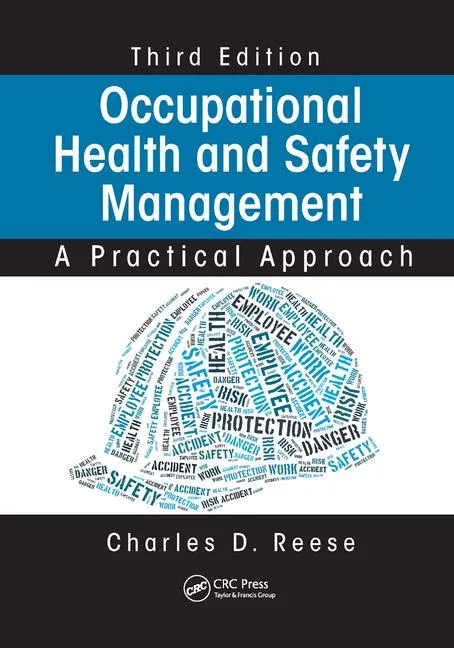
    Occupational Health and Safety Management: A Practical Approach, Third Edition

  • 9781482217148.jpg

    Fall Prevention and Protection: Principles, Guidelines, and Practices

See More Products
×

Become a Leader in Safety Culture

Build your knowledge with ISHN, covering key safety, health and industrial hygiene news, products, and trends.

JOIN TODAY
  • RESOURCES
    • Advertise
    • Contact Us
    • Directories
    • Manufacturing Division
    • Store
    • Want More
  • SIGN UP TODAY
    • Create Account
    • eMagazine
    • Newsletters
    • Customer Service
    • Manage Preferences
  • SERVICES
    • Marketing Services
    • Reprints
    • Market Research
    • List Rental
    • Survey/Respondent Access
  • STAY CONNECTED
    • LinkedIn
    • Facebook
    • YouTube
    • X (Twitter)
  • PRIVACY
    • PRIVACY POLICY
    • TERMS & CONDITIONS
    • DO NOT SELL MY PERSONAL INFORMATION
    • PRIVACY REQUEST
    • ACCESSIBILITY

Copyright ©2026. All Rights Reserved BNP Media, Inc. and BNP Media II, LLC.

Design, CMS, Hosting & Web Development :: ePublishing