ISHN logo
search
cart
facebook twitter linkedin youtube
  • Sign In
  • Create Account
  • Sign Out
  • My Account
ISHN logo
  • NEWS
    • Today's News
    • Global Safety News
    • Government Regulations
  • PRODUCTS
    • Product Innovations
    • Featured Products
  • TOPICS
    • Environmental Health and Safety
    • Facility Safety
    • Workplace Health
    • Occupational Safety
    • PPE
    • More Topics
  • CONSTRUCTION
  • TECHNOLOGY
  • COLUMNS
    • Best Practices
    • Dave Johnson: What’s going on
    • Editorial Comments
    • Leading Safety
  • MULTIMEDIA
    • ISHN Podcast
    • Videos
    • Cold Stress Education Quiz
    • Webinars
    • White Papers
  • MORE
    • Buyer's Guide
    • Newsletters
    • Convention Companion
    • Polls
    • Events
    • ISHN Store
    • Sponsor Insights
  • EMAGAZINE
    • eMagazine
    • Archived Issues
    • Contact
    • Advertise
  • JOIN TODAY!
Today's Safety News

CSB: Where’s combustible dust standard?

February 8, 2012

Tuesday, February 7, 2012, marked the fourth anniversary of the massive sugar dust explosion that killed 14 workers and injured 38 others at the Imperial Sugar Refinery in Port Wentworth, Georgia. 

The Chemical Safety Board marked the occasion by issuing this press statement from Chairman Rafael Moure-Eraso:

“CSB board members and investigation staff keep the memory of this tragedy close to us as we continue to advocate for changes in national workplace rules aimed at preventing such accidents in the future. We believe the safety recommendations that followed from our investigation of this accident will go far in saving lives. I am pleased to report that on this accident anniversary all but one of our recommendations have been successfully adopted by their recipients. 

“Specifically, the CSB called on the Occupational Safety and Health Administration, OSHA, to “proceed expeditiously” on our 2006 recommendation that OSHA promulgate a new combustible dust standard for general industry. We believe such a standard is necessary to reduce or eliminate hazards from fires and explosions from a wide variety of combustible powders and dust. 

“I am disappointed that OSHA has not moved forward on this recommendation. Completing a comprehensive OSHA dust standard is the major piece of unfinished business from the Imperial Sugar tragedy.

“The CSB’s report into the accident was issued at a public meeting in Savannah, Georgia, in September of 2009. It concluded that Imperial Sugar had inadequately designed and maintained dust collection and sugar handling equipment and that inadequate housekeeping practices allowed highly combustible sugar dust and granulated sugar to accumulate to explosive concentrations throughout the refinery’s packing buildings.

“It is gratifying to be able to report that during 2011 the CSB designated Imperial Sugar’s responses to all five of our safety recommendations to the company as “Closed-Acceptable Action.” Specifically, the CSB recommended that Imperial Sugar develop a corporate-wide comprehensive program to control combustible dust accumulation, develop training materials that address combustible dust hazards and train all employees and contractors, and improve its evacuation procedures. We recommended Imperial Sugar comply with the National Fire Protection Association’s (NFPA) recommended practices for preventing dust fires and explosions, and urged the company to conduct a comprehensive review of all of its manufacturing facilities’ adherence to NFPA standards.

“We recently received notice from Imperial Sugar’s property insurer, Zurich Services Corporation, that it is providing its risk engineers ongoing training in the hazards of combustible dusts, which we recommended. This will help ensure that hazards are identified during insurance inspections so that the companies can eliminate or reduce the hazard before a catastrophic accident occurs. Additionally a series of safety recommendations to AIB International and the American Bakers Association -- to develop combustible dust training and auditing materials -- also have all been given a status of ‘Closed-Acceptable Action.’ 

“’Closed-Acceptable Action’ means that the recipients have effectively implemented the safety changes requested by the board, and I commend them for taking these important recommendations seriously.

“The CSB recently reissued our call for a dust standard with our investigation into three flash fires that occurred in a series of accidents at the Hoeganaes Corporation iron powder processing plant in Gallatin, Tennessee, taking five lives. Indeed, OSHA  lowered the CSB recommendation’s priority on its regulatory agenda in recent weeks.

“I continue to advocate for a comprehensive combustible dust standard, and encourage industry’s support. Preventing dust explosions is a necessary investment: prevention saves lives and massive property losses.   It is my view that a comprehensive standard will save lives and prevent future combustible dust fatalities.”

KEYWORDS: accident CSB

Share This Story

Looking for a reprint of this article?
From high-res PDFs to custom plaques, order your copy today!

Recommended Content

JOIN TODAY
to unlock your recommendations.

Already have an account? Sign In

  • forklift safety

    Exploring the latest technologies in forklift safety

    With more staff and more stock in warehousing now more...
    Facility Safety
    By: Josh Cramer
  • welding

    All about welder’s flash or arc eye

    A flash burn is a painful inflammation of the cornea,...
    Environmental Health and Safety
  • dangerous jobs

    The 10 most dangerous jobs in the U.S.

    On-the-job deaths have been rising — hitting the highest...
    Transportation Safety
    By: Benita Mehta
Manage My Account
  • eMagazine Subscriptions
  • ISHN Newsletter & Other Newsletter Alerts
  • Online Registration
  • Manage My Preferences
  • Subscription Customer Service

More Videos

Sponsored Content

Sponsored Content is a special paid section where industry companies provide high quality, objective, non-commercial content around topics of interest to the ISHN audience. All Sponsored Content is supplied by the advertising company and any opinions expressed in this article are those of the author and not necessarily reflect the views of ISHN or its parent company, BNP Media. Interested in participating in our Sponsored Content section? Contact your local rep!

close
  • man wearing the the Sundström SR200 Full Face Mask Respirator
    Sponsored byOHD

    5 Fit Testing Mistakes That Could Cost You

  • This image shows Magid AcuSpex polarized blue mirrored safety glasses.
    Sponsored byMagid Glove and Safety

    Construction PPE Guide: What Crews Need for Each Task

  • lone worker in confined space
    Sponsored byAlphasense Ltd.

    GET THE LEAD OUT of your Safety Oxygen Sensors!

Popular Stories

SpaceX 7 launch

OSHA Investigating Fatal Fall at SpaceX Starbase

Worker Impairment

How to Tell When a Co-Worker is Impaired? A Safety Pro’s Challenge

Automated loading dock equipment

After March 2026 Rivian Death, Safety Managers Reassess Loading Dock Systems Under OSHA's Warehouse Emphasis Program

top 10 most dangerous jobs

Poll

Seasonal Readiness

With the federal heat stress prevention rule on the horizon, which area of your safety program needs the most attention?
View Results Poll Archive

Products

Surviving an OSHA Audit A Management Guide, 2nd Edition

Surviving an OSHA Audit A Management Guide, 2nd Edition

See More Products

ISHN Podcasts

Related Articles

  • In wake of deadly W. Va. metal dust explosion, CSB renews call for combustible dust standard

    See More
  • CSB head renews call for combustible dust standard

    See More
  • Chemical Safety Board chair calls for OSHA combustible dust standard (7/30)

    See More

Related Products

See More Products
  • 1119010160.jpg

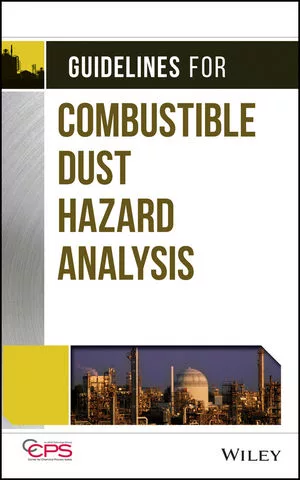
    Guidelines for Combustible Dust Hazard Analysis

See More Products

Events

View AllSubmit An Event
  • June 26, 2025

    NFPA 660: How to Use the New Consolidated Combustible Dust Standard

    ON DEMAND: Combustible dust and particulate solids can pose a serious hazard in many industries. Over the last 100 years, the National Fire Protection Association (NFPA) committees created many industry- and commodity-specific standards to mitigate those hazards.
View AllSubmit An Event

Related Directories

  • Scientific Dust Collectors

    Scientific Dust Collectors (SDC) began in 1981 when our first patent for improving filter cleaning was issued. Our patented UniFlow Supersonic Nozzle -based cleaning system is where it all starts. Combined with our High Side Inlets, Wide Filter Spacing, and Inlet Baffling, we are able to guarantee performance, efficiency, and filter life. ASHRAE 199 Test Lab on site.
×

Become a Leader in Safety Culture

Build your knowledge with ISHN, covering key safety, health and industrial hygiene news, products, and trends.

JOIN TODAY
  • RESOURCES
    • Advertise
    • Contact Us
    • Directories
    • Manufacturing Division
    • Store
    • Want More
  • SIGN UP TODAY
    • Create Account
    • eMagazine
    • Newsletters
    • Customer Service
    • Manage Preferences
  • SERVICES
    • Marketing Services
    • Reprints
    • Market Research
    • List Rental
    • Survey/Respondent Access
  • STAY CONNECTED
    • LinkedIn
    • Facebook
    • YouTube
    • X (Twitter)
  • PRIVACY
    • PRIVACY POLICY
    • TERMS & CONDITIONS
    • DO NOT SELL MY PERSONAL INFORMATION
    • PRIVACY REQUEST
    • ACCESSIBILITY

Copyright ©2026. All Rights Reserved BNP Media, Inc. and BNP Media II, LLC.

Design, CMS, Hosting & Web Development :: ePublishing