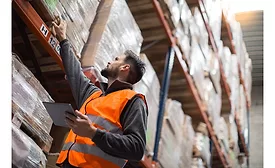
As the pandemic continues, warehouse workers are still adapting. In particular, social distancing is essential to prevent the spread of the virus, keep employees safe, and maintain operations.
A new study out of North Carolina State University sheds some interesting light on how employees – some of them, anyway – view their robotic co-workers.
They blame them for workplace accidents – if they believe the robots are autonomous.
Researchers showed study participants scenarios of several workplace accidents involving both a human and a robot.
Safety in Amazon warehouses has been scrutinized by the media in recent years, particularly for interactions between humans and robots. TechCrunch reports that the online retail giant has been introducing a new worker safety wearable to 25+ sites to prevent accidents involving robotic systems in their warehouses.
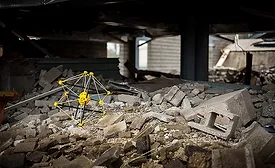
It’s a bird, it’s a plane… no, it’s a Squishy Robot, dropped from a helicopter or a drone to transmit crucial environmental data to emergency responders at disaster scenes.
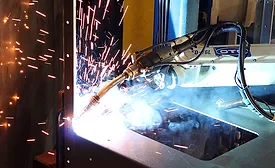
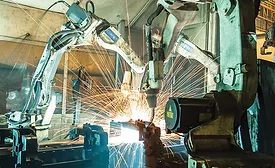
Pre-engineered robotic welding cells make automation available for a wide range of applications. Installing robots in facilities of all sizes can boost productivity by increasing weld speed, efficiency and quality. They also reduce cycle time by allowing a single operator to fixture the next piece while the robot welds.
Robotic welding provides manufacturers with several competitive advantages. Most importantly, it makes them more productive while generating more consistent, higher quality welds and reducing waste. Robots also empower manufacturers to address the current shortage of skilled welders to recruit.
With the recent focus on robots and worker safety, it may be surprising to learn that the National Institute for Occupational Safety and Health (NIOSH) first addressed this issue 34 years ago. In 1984, the agency released safety recommendations for working with robots after an experienced operator of an automated die-cast system died when he became pinned between the back end of an industrial robot and a steel safety pole.
Robotics pose safety challenges in the workplace, Tennessee ash coal cleanup workers win a legal victory and an air traffic controller starts slurring her words while on duty. These were among the top occupational safety and health stories featured on ISHN.com this week.
Robots are becoming increasingly popular in workplaces around the globe, especially cobots, the machines designed to work next to humans. But when considering implementing any technology, it's essential to keep safety at the forefront.
What possibilities exist for robots malfunctioning and hurting people or otherwise compromising worker well-being?