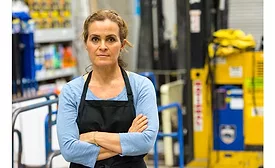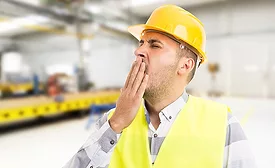
Last month in Seattle the National Safety Council's Campbell Institute held a conference where one of the major topics was, "Fatigue: Managing the Hidden Risk." My question: What's so "hidden" about fatigue? Everyone you talk to in today's 24/7 wired world is fatigued, tired, beat. Just ask them.
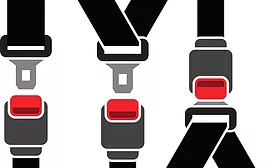
In these days and times, knowing what we know, with most cars buzzing or beeping until the seat belt is fastened, why on earth would anyone choose to drive or ride without the obvious and easy protection that safety belts provide?
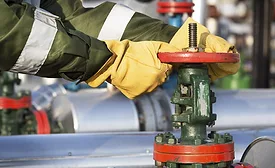
OSHA, the National Institute for Occupational Safety and Health (NIOSH), the State of North Dakota, and Bakken Basin Safety Consortium have signed an alliance to protect employees, and promote safety and health in the oil and gas industry.
The two-year alliance will target both employees and employers.
We’ve seen the popularity of lighter, more flexible and breathable segmented trim, and more enhanced visibility by integrating LED luminescence directly on the trim.
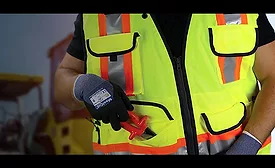
While we tend to think only in terms of the visibility factor, it is important to remember that the latest ANSI/ISEA 107-2015 standard covers both basic design and performance of high visibility in work garments.
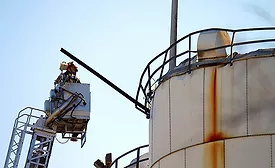
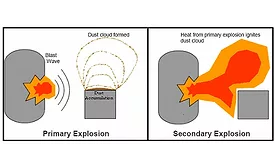
Most organizational leaders are aware of the direct impact that a dust explosion could have on their facility. Even when it is understood that hazards exist within a system and that protection measures have been recommended, a flawed cost-benefit analysis could result in no action being taken.
Workplace discrimination happens when employers treat employees differently due to factors like their race, age, gender or sexual orientation.
There are federal laws against such treatment in the United States, but it still happens. And, many people initially feel surprised after learning of the link between workplace discrimination and reduced employee safety.
Most Americans spend close to 90 percent of their time indoors, so creating environments that are safer, cleaner and built with wellness in mind is more important than ever. But finding solutions that prove a real return on investment and offer true safety benefits to the public can be difficult.
Manufacturing locations can be dirty, dusty environments by nature, depending on what is produced in a given location. As a result, many manufacturers are no stranger to airborne dust and the health hazards it can pose to workers regularly exposed to it.
The American Society of Safety Professionals (ASSP) has announced leadership changes on two ANSI/ASSP standards committees that work to advance occupational safety and health across the country. Voluntary consensus standards promote best practices and prevent worker injuries, illnesses and fatalities.
DEKRA Organisational Reliability, a leading consultancy with expertise and services in the fields of safety and behavioural change, has confirmed its commitment to a developing Turkish market through the launch of several new services, each designed to create and embed an organisational culture of care within the region.